Gaming Controller Compatibility Across Handheld Platforms
Platform holders never agreed on standards, leaving gamers with unpredictable controller support.
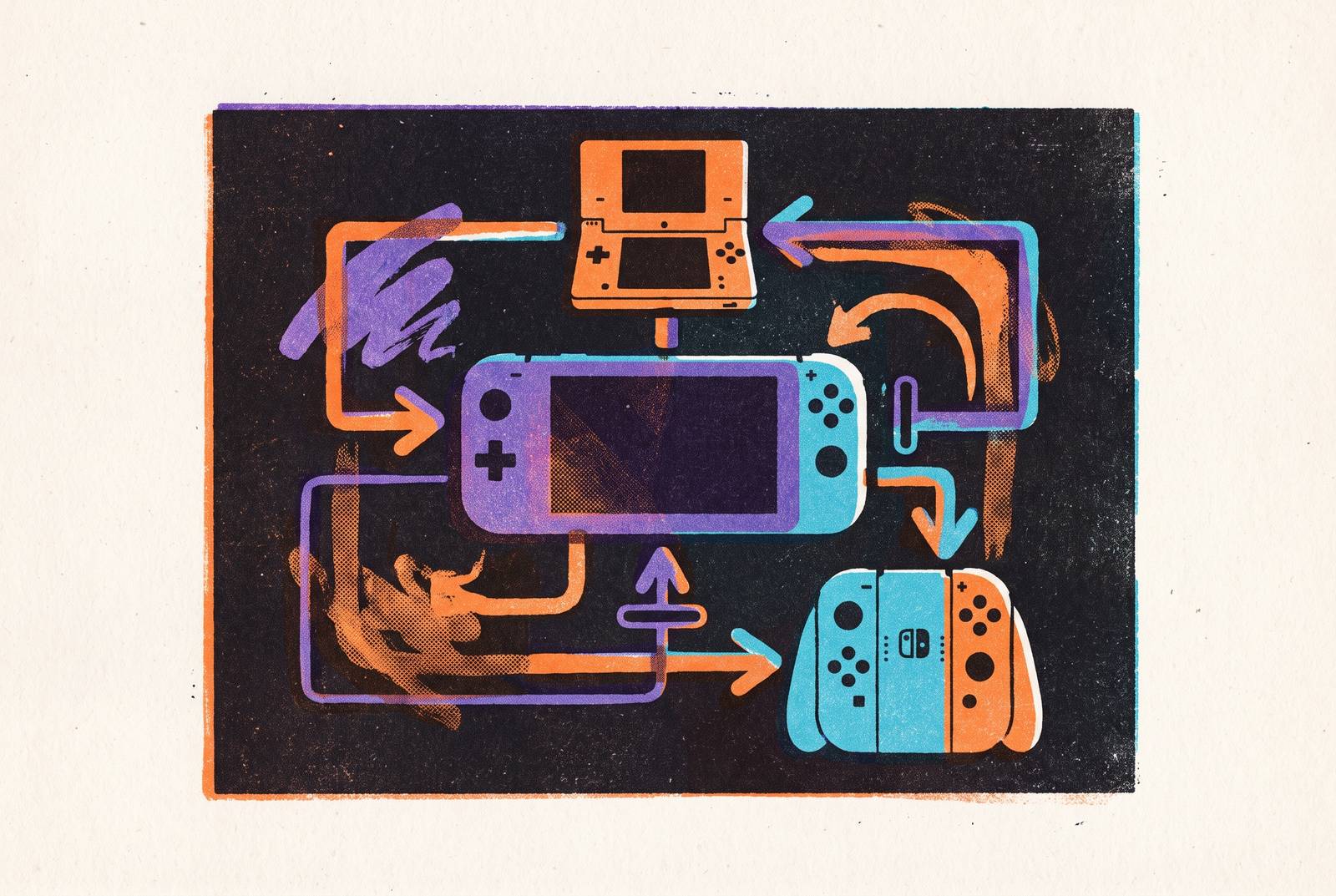
Controller compatibility across handhelds isn't one setting you check once and forget. It's a stack of separate decisions, made by a handful of platform holders and hardware makers who never once agreed to compare notes. Mobile gaming pulled in $113.3 billion in 2025, up 10.7% year over year, per Newzoo, more than console and PC combined. Roughly 3.0 billion people worldwide count as mobile gamers, 83% of all tracked players, against console's 645 million (18%). At that scale, the fact that a controller might just stop working mid-match isn't a niche gripe. It's the thing standing between a huge chunk of the industry and the people who'd rather hold a real thumbstick than smear their thumbs across glass.
How input standards work across platforms, and where they diverge
Before a game ever registers a button press, the operating system has already made a decision about it. iOS and Android both ship system-wide device profiles for input hardware, the layer that turns "thumb moved joystick" into something an app can actually read. But having that profile sit there and having a developer wire it into their game are two separate things, and that gap is where most "why won't this just work" moments come from.
Three layers handle the job, and they behave nothing alike. Native support means the controller talks Bluetooth HID straight to a game built to listen for it: no middleman, lowest latency, full access to vibration, gyro, and on-screen prompts that actually match the buttons in your hand. Third-party mapping tools, the kind that grab your taps and translate them into virtual controller signals, stretch support to older games that never asked for a controller in the first place, but they add latency you can feel and they tend to snap the moment the app updates. Then there's cloud streaming: Moonlight routes input to a PC you own, GeForce NOW routes it to Nvidia's servers, and either way your phone's hardware limits stop mattering because the phone is just a window into a machine sitting somewhere else.
Two more details decide whether any of this holds together once you're actually playing. Apple's MFi (Made for iPhone) program licenses which controllers get full native support on iOS, and a USB-C plug clicking into the port tells you nothing about whether that license exists. Meanwhile, the competing input-recognition standards Windows uses to identify a gamepad, XInput and DirectInput, determine whether a cloud streaming client sees your controller as a real input device or as a confused accessory that lights up and does nothing useful. Bluetooth version decides connection quality on top of that: BLE 5.2 and up pairs fast, sips battery, and switches between devices cleanly, while an older BLE 4.0 controller might connect just fine and then introduce latency or stability issues during extended play.
iOS compatibility: MFi certification, what it gates, and what works
MFi certification is Apple's gatekeeper, and it gates more than most people assume. An uncertified controller connects over Bluetooth without much trouble, but it may lack advanced features and can disconnect unexpectedly, with no software workaround available.
Connector type adds its own wrinkle. iPhone 15, 16, and 17 use USB-C, which allows wired, low-latency input for controllers built around it, but the plug clicking into place proves nothing about MFi compliance on its own. Anyone still holding an iPhone 14 or earlier is on Lightning, not USB-C, a separate hardware lane with its own controller compatibility considerations.
Game by game, the experience splits wide open, and this is where most of the frustration actually lives. Diablo Immortal and Fortnite handle certified controllers cleanly because they built controller support in from day one. Call of Duty: Mobile is pickier: it limits official support to a small set of certified controllers, and only during gameplay, not the menus, so a player taps the screen to navigate and only picks up the controller once the match loads. Apple Arcade sidesteps most of this mess by requiring every title in the catalog to support MFi controllers, which makes it the calmest corner of the entire iOS controller landscape, not by accident but by contract.
Cloud gaming changes the math here. Xbox Cloud Gaming, GeForce NOW, and PlayStation Remote Play handle controller input at the streaming client level, which mostly steps around MFi requirements for the game itself. Certified hardware still runs smoother, but its job has shifted: it no longer unlocks the game, it unlocks the app running the game.
Android compatibility: broader by default, inconsistent in practice
Android takes the opposite approach: open the gate wide and let the chips land where they land. Bluetooth HID support is native, so most Bluetooth controllers pair without anyone's blessing and without a licensing program standing in the way.
That openness buys reach, not consistency. Android 13 and later provide system-wide HID profiles, but per-game support still varies more than it should. Roblox handles controllers without fuss. Call of Duty: Mobile, again, limits official support to a small set of certified controllers and still forces touch input for menus, the same restriction it runs on iOS. Meanwhile, a different game on the identical phone, running the identical OS version, might offer partial support or none at all, and there's no reliable rule for predicting which until you actually plug in and try.
Wired USB-C sidesteps the Bluetooth guessing game entirely, which is exactly why clip-style controllers that clamp onto a phone tend to favor that route. Fragmentation across Android, different OS versions, manufacturer skins, phone dimensions, hits something even more basic: whether a clip controller physically fits the device before software compatibility becomes a question at all. Demand for hardware that clears both Android and iOS certification has grown in response; over half of consumers now say they want controllers compatible with both platforms, according to Turtle Beach's market data.
Windows handhelds: a different compatibility surface where PC standards dominate
Windows handhelds throw out the mobile rulebook completely, because they're not running a mobile OS to begin with. They run full Windows, so controllers register as standard PC input devices, and XInput, the protocol built around the Xbox controller, is the dominant standard for PC gamepad input, and most controllers targeting Windows compatibility are designed to support it.
That has a genuinely nice side effect. A controller that needed MFi certification to behave on an iPhone needs nothing of the sort here; Windows' HID stack just handles it. But game-level support maps to PC controller declarations, not mobile game libraries, so a controller streaming flawlessly through cloud gaming on an Android phone might behave a little differently once it's plugged into the same title running natively on a Windows handheld.
Gyro and motion input add another wrinkle: anyone used to gyro aiming on mobile shouldn't assume the feature comes along automatically. Some controllers support it natively, and Windows handheld games increasingly build around it, so anyone used to gyro aiming on mobile shouldn't assume the feature comes along automatically. Wired USB-C remains the safer call for anything competitive or timing-sensitive, regardless of platform, while Bluetooth remains the more portable option. The controllers that hold up best across this whole divide are the ones built to speak both languages at once: XInput emulation for Windows, Bluetooth HID for mobile, in the same box.
Dedicated handhelds: closed ecosystems with locked-in input standards
Nintendo's Switch 2 uses a proprietary protocol for Joy-Con 2 and the Pro Controller, and third-party controller compatibility remains unconfirmed. Nintendo has not publicly confirmed a licensing program for third-party controllers, and advanced features may be unavailable with no software workaround.
Steam Deck runs the opposite philosophy. It runs SteamOS, a Linux-based OS, and while it has its own built-in controls, external controllers connecting via Bluetooth or a wired port are handled through Steam Input, a software layer designed to remap controllers to a game's expected inputs. That turns compatibility from a hardware problem into a software one, and that's a genuinely easier problem to solve than Nintendo's approach, because a config file can be patched in a way a locked-out chipset never can. Physically, both platforms share the constraint mobile clip controllers already deal with: either a full-size gamepad in handheld mode, or something clamping around the device itself, and fit becomes its own small puzzle either way.
What Hall Effect sensors, connection type, and firmware change for compatibility
Stick drift is a compatibility problem wearing a hardware costume. Hall Effect and TMR (Tunnel Magnetoresistance) sensors use magnetic sensing instead of physical contact, sidestepping the wear that causes drift in traditional potentiometer sticks and stretching how long a controller stays usable. Why does this matter for compatibility specifically, and not just durability? Because a drifting stick sends phantom input the game reads as real, and that breaks the same way whether you're on iOS, Android, or a Windows handheld. The platform has no way to tell the input is lying to it.
Connection type sets a rough hierarchy of its own. Wired USB-C is the top choice for latency and consistency, assuming the controller and the phone actually agree on the same USB-C standard, which isn't guaranteed just because the cable fits. A 2.4GHz wireless dongle offers low-latency wireless play but demands a receiver, one more thing to carry and one more thing that might not plug into a phone without an adapter tagging along. Bluetooth 5.0 and up is the most portable option of the three, no dongle, no cable, working across nearly everything, though latency runs a touch higher and pairing behavior still shifts depending on whether the device is iOS, Android, or Windows.
Firmware updatability decides how long any of this stays usable. A controller that takes over-the-air updates can pick up new HID profile tweaks and latency fixes long after purchase, stretching its useful life across OS updates that would otherwise strand it. One spec question separates genuinely cross-platform hardware from mobile-only hardware more cleanly than anything else on this list: can it emulate XInput? A controller that only speaks mobile Bluetooth HID will not work cleanly with cloud streaming clients or Windows handhelds, full stop, no workaround. Lab testing found no measurable latency difference between budget and premium controllers on mobile. What actually separates the tiers is ergonomics and build quality, not raw responsiveness, so paying more for "faster" is paying for a feeling, not a number.
Cloud gaming as the compatibility equalizer, and where it still breaks
Cloud gaming quietly solves half the mobile compatibility puzzle by moving the decision up a level. The controller only needs to work with the streaming app, not with each individual game, since input gets handled at the client layer and every per-game controller declaration on mobile becomes beside the point. Xbox Cloud Gaming, PlayStation Remote Play, GeForce NOW, Amazon Luna, and Steam Link have all tested clean with mobile controllers, no extra configuration required, according to source testing.
That's genuinely useful for anyone whose mobile gaming mostly means streaming. Pick one well-chosen controller with solid client-level compatibility, and the entire library opens up at once, no more checking each game's controller support page individually.
None of it is frictionless, though. Network latency stacks directly on top of input latency, and while 5GHz Wi-Fi or a decent 5G connection keeps that manageable, a weak or congested connection makes precision inputs unreliable no matter how good the controller sitting in your hands is. Some cloud platforms on iOS remain browser-based, a holdover from old App Store restrictions, adding a software layer that can quietly scramble button mapping. And a controller lacking XInput emulation might connect to a streaming client just fine and then produce wrong or missing inputs, because the client expected an Xbox-style signal and got something it doesn't recognize instead. Search interest around tools like Moonlight rose substantially year over year in early 2026, per Alibaba electronics research, a sign that controller-driven remote play is turning into the default use case for a growing share of players rather than the workaround it used to be.
Choosing a controller that works across the platforms you use
Start with the platforms already sitting in the room, not the ones that might show up someday. Compatibility here is binary per platform, not a sliding scale, so the honest first question is blunt: iPhone only? Android only? Both, plus cloud streaming? A Windows handheld thrown into the mix too?
For iPhone-first players, MFi certification isn't optional if full feature access actually matters, and skipping it just to save a bit of money upfront is how someone ends up with a controller that can't rumble. The Scuf Nomad, built specifically for iPhone, adds two back buttons and symmetrical sticks on top of the standard clip-style layout, according to GamesRadar's coverage.
Android-first players, or anyone chasing maximum longevity out of the hardware, get the most out of a USB-C wired connection, which removes Bluetooth pairing inconsistency from the equation.
Anyone trying to run one controller across iOS, Android, and beyond needs to confirm XInput emulation before buying, full stop, since that single spec decides whether the thing works on a Windows handheld or through cloud streaming down the line. The ELO Vagabond, per GamesRadar, uses a pivoting USB-C connector with microswitch buttons and lists compatibility with PS5 Remote Play, Xbox Game Pass, Steam Link, and GeForce NOW, a solid case study in what "actually cross-platform" looks like written out on a spec sheet.
Players who'd rather skip clip-style controllers altogether can go the full-size gamepad route; a phone mount turns a standard Bluetooth pad into a mobile setup, trading a bit of pocketability for a shape the hands already know. Wireless now makes up the majority of the controller market, with Bluetooth as the dominant protocol, per Turtle Beach's data, though controllers offering both Bluetooth and USB-C leave more room to move between platforms without hunting down an adapter at 11pm.
And on the question everyone eventually asks out loud: does spending more actually buy better performance? No. Lab testing found no measurable latency difference between budget and premium controllers on mobile. The extra money buys ergonomics and build quality, not speed, which means the real decision was never about price. It comes down to knowing which platforms are actually getting used, and which invisible standard, MFi, XInput, Steam Input, or Nintendo's own licensing scheme, quietly determines what will and won't work.