Is a Phone and Controller Better Than an Android Handheld
Phone and controller wins on cost and cloud, not long sessions.
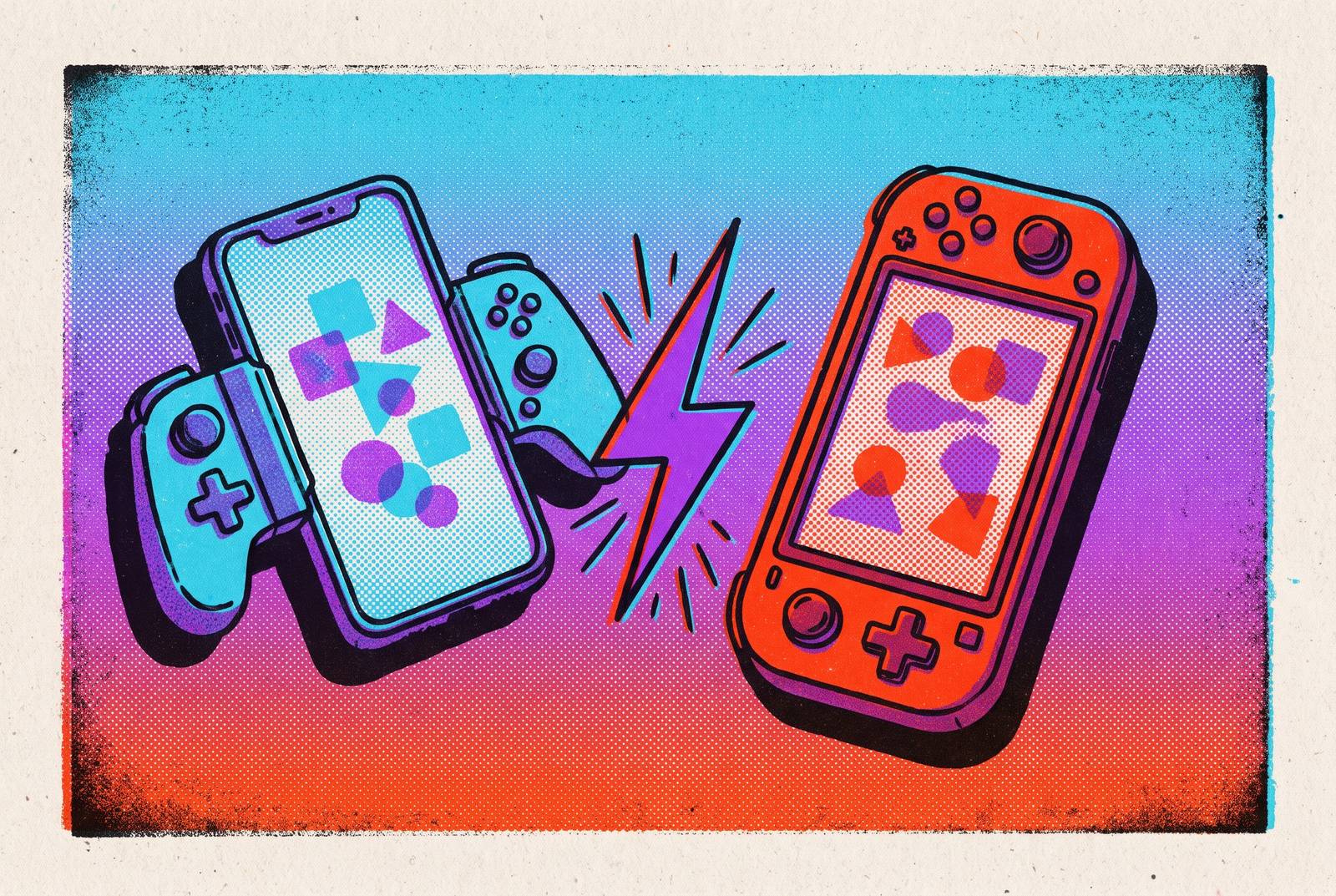
A phone and controller can beat an Android handheld, but only when it suits the games, places, and session lengths that make up your actual play. Compare which setup gives you access to the games you want without making comfort, connectivity, or your phone’s battery the price of admission.
Why this comparison is harder to answer in 2026 than it was two years ago
Dedicated Android handhelds have grown beyond niche retro boxes. OLED screens, active cooling, large batteries, and flagship-class chips now feature across the mid-range and premium tiers, giving the category a stronger claim to demanding portable play. Cloud gaming also lets a phone play games that its own hardware could not run locally. The two sides are closing different gaps. Handhelds are narrowing the chip gap, while streaming is expanding the phone’s effective catalog, leaving less room for a verdict based on hardware alone.
That makes the question genuinely harder than it once was. A capable phone is no longer automatically the more powerful gaming choice in every practical sense, and a dedicated device is no longer the only route to a wider library. Neither development erases the other side’s strengths. Instead, both make the circumstances of play more decisive than the category printed on the box.
What you actually spend to get started with each setup
Starting with the capable phone you already own costs the least. Adding a clip-on controller requires a modest outlay rather than another complete device, making this the lowest-cost route into high-end mobile and cloud gaming. That advantage rests on one important condition. The phone must already be part of your life, rather than a purchase made specifically to assemble the gaming setup. Otherwise, the comparison is between buying a handheld and buying a flagship phone plus its controls.
Dedicated hardware makes that distinction concrete. The Retroid Pocket 6 starts from $244 and uses a Snapdragon 8 Gen 2, so it has the processing power of a phone, controls built in, and cooling that holds up better during play than on most phones. Its price buys a complete gaming device. At the premium end, the AYN Odin 3 is available for pre-order with a Snapdragon Dragonwing Q8, a 6-inch 1080p AMOLED 120Hz display, and a large battery with fast charging. These handheld alternatives to the phone occupy different spending levels within the category.
The financial trap is treating an expensive new phone as though it were already paid for. Buying a flagship specifically for gaming hands the cost advantage back to the handheld, because flagship money also buys a device designed primarily to be a phone. That does not make the phone a poor purchase.
Where raw hardware performance actually falls today
A recent flagship phone still has a faster chip than most dedicated handhelds. Its processor can be powerful enough for PS2, GameCube, and beyond, while its screen is typically brighter and sharper than those on budget handhelds. Those strengths matter most when play lasts only a short time. But the premium handheld tier has drawn close enough that a processor comparison no longer settles the purchase. The distinction is increasingly between available power and power sustained through play.
The AYN Odin 2 Portal illustrates that shift. Its Snapdragon 8 Gen 2, 7-inch 1080p OLED display, 120Hz refresh rate, and large battery make it a strong all-round performer for demanding emulation and native Android games, even as the Odin 3 approaches. Cooling gives this hardware a practical role beyond its specifications. A phone can lose a meaningful share of GPU performance under sustained gaming load as it throttles to manage heat. Demanding emulation targets such as Switch and PS3 make that degradation more consequential.
What about the perfectly reasonable objection that your phone is already powerful enough? For casual play and cloud gaming, it often is, particularly when the phone is not doing demanding local rendering. Long emulation sessions pose a different question. Beyond 30 minutes, the relevant test is less about what the chip can achieve briefly and more about how well the device keeps playing under load.
How session length and ergonomics determine which setup actually gets used
Short sessions tend to flatter the phone’s strengths. For 5- to 30-minute stretches in a waiting room, coffee line, or commute, touch controls or a clip-on controller can work well without making tired hands the main worry. The device is already within reach. For this kind of play, adding a separate handheld can solve a problem that the session never lasts long enough to create.
Longer sessions change the physical comparison. Wrist and thumb fatigue can become noticeable with a phone-in-grip format, while dedicated handhelds are designed around one to two hours of comfortable play. If playing starts to hurt enough to stop, a faster processor cannot bring that playing time back. The useful device is the one that remains comfortable when the game asks for another hour.
Portability also becomes less obvious once the controller is attached. A phone-and-controller combination, including one using a wired USB-C connection, is typically wider than a pocket-sized handheld such as the Miyoo Mini Plus. Dedicated hardware also offers tactile buttons, real D-pads, and, on devices such as the Retroid Pocket Flip 2, Hall effect joysticks that clip-on hardware does not always match.
For adult commuters, however, comfortable hardware still has to justify the trip. Only some days may include enough uninterrupted play to warrant carrying a handheld, while the phone covers whatever gaming happens on the others. A device designed for a long session provides little benefit when the available session ends before the coffee arrives.
How cloud gaming changes what a phone-and-controller setup can reach
Cloud gaming is the strongest argument for looking beyond a phone’s local processing power. It opens access to PC and console games by moving the demanding work away from the phone. The handset becomes the screen and input endpoint. For someone with reliable connectivity, a quality controller and a streaming service can therefore make the phone a functional alternative to dedicated gaming hardware.
Xbox Cloud Gaming offers the Game Pass catalog and is included in Game Pass plans. As of November 2026, each plan has a monthly cloud-hours cap, with higher tiers receiving more hours. Access is therefore not simply a question of subscribing. Xbox is also testing prepaid playtime packs through an Xbox Insider preview as of October 21, 2026, while an ad-supported free streaming option began as an Insider preview on July 23, 2026. Those options lower the barrier for players without a Game Pass subscription, though they remain framed as previews.
Remote play lets players stream games from hardware they own, so they can play without buying access through a cloud service. Steam Link is free on Android and iOS and streams from the player’s PC, which runs the game while the phone receives the picture and returns inputs. PS Remote Play works much the same way for PS5 owners. In both cases, the phone gains access to another machine’s gaming capability.
The weak link is the connection. Streaming requires strong Wi-Fi or 5G and can fail on airplane Wi-Fi, weak hotel networks, or commutes with patchy signal. Most locally installed handheld games can instead work offline after setup and downloads, although that is not a promise for every title. A large available library is little consolation when the network will not let you through the door.
What dedicated handhelds do that a phone genuinely cannot replicate
The dedicated handheld’s strongest advantage is the separation between gaming and everything else. It has its own battery, controls, and purpose, so playing does not consume the charge needed from the phone later in the day. A controller cannot create that independence. For a working commuter, the distinction is practical rather than nostalgic, particularly when gaming competes with the phone’s other duties.
A handheld need not double as the place for competing apps, everyday notifications, and calls arriving mid-boss. Its narrower job is part of the appeal. The gaming device is separate from the communication device. On a long flight or multi-day trip, the separate batteries make that division especially useful.
Catalog breadth strengthens the case, but it needs careful boundaries. Retro emulation, including Nintendo exclusives, can justify a dedicated setup when the player’s interests extend beyond mobile-native games, although emulation is not exclusive to handhelds. An Android handheld still has limits on which Windows games it can run. AAA PC games through Windows handhelds and modded indies are part of the wider choice of dedicated hardware, but every Android device cannot be assumed to run that same library.
Specific games reveal where those routes diverge. Civilization VI illustrates why strategy and simulation can benefit from screen space, while Stellaris: Galaxy Command is a simplified mobile spin-off of the full PC game. Fighting games and action-RPGs with complex multi-input controls also expose the limits of touch, although a phone controller can address that particular problem. When those games demand sustained sessions of 60 minutes or more, comfort and battery independence strengthen the handheld’s case further.
The Flip 2 combines a clamshell design, AMOLED display, Hall effect joysticks, active cooling, and a large battery. The Portal offers a different format built around its larger OLED screen, with both illustrating the category’s emphasis on extended local play. Neither example makes the phone obsolete. A power bank can address the objection about phone battery drain, but adding it to a phone-and-controller setup narrows the size and weight advantage while introducing another piece to manage.
A practical framework for choosing based on how, where, and what you play
The choice depends on how long play lasts, how good the connection is, and which games are in the catalog. A phone-and-controller setup fits players better when they already own a capable phone and mostly play for under 30 minutes. Mobile-native games such as Balatro, Stardew Valley, Vampire Survivors, and puzzles reinforce that choice, as do streamed games played on reliable Wi-Fi or 5G. Playing only now and then also gives little reason to have another device to look after and charge.
A dedicated Android handheld makes more sense when play lasts 30 minutes or more, several times a week. Its integrated controls, cooling, and separate battery serve consistent play. Frequent travel strengthens that case, especially where connections are unreliable or phone charge cannot be spared. Retro emulation and games that need controller input also make a dedicated setup more appealing when play lasts long enough for its shape and controls to help. Cloud-streamed AAA games can belong in that library too, but the handheld does not remove their dependence on connectivity.
For many adult commuters, the useful answer is hybrid. The phone stays in the pocket for micro-sessions and mobile-native games, while the handheld comes out for planned longer sessions, travel days, and games outside the phone’s practical catalog. That does not mean packing both every day. What there is likely to be time to play that day should guide when to pack the second device.
If a handheld sits unused in a bag for two weeks, the phone-and-controller path probably covers the gaming that is really happening. But emulation sessions that drain the phone or stop early because hands get tired give a reason to buy dedicated hardware. So does a catalog that repeatedly exceeds what mobile platforms support. The purchase should follow those recurring limits.