plug-and-play phone controllers ranked by setup simplicity and app ecosystem
The controllers that work fastest and integrate deepest earn the top spot.
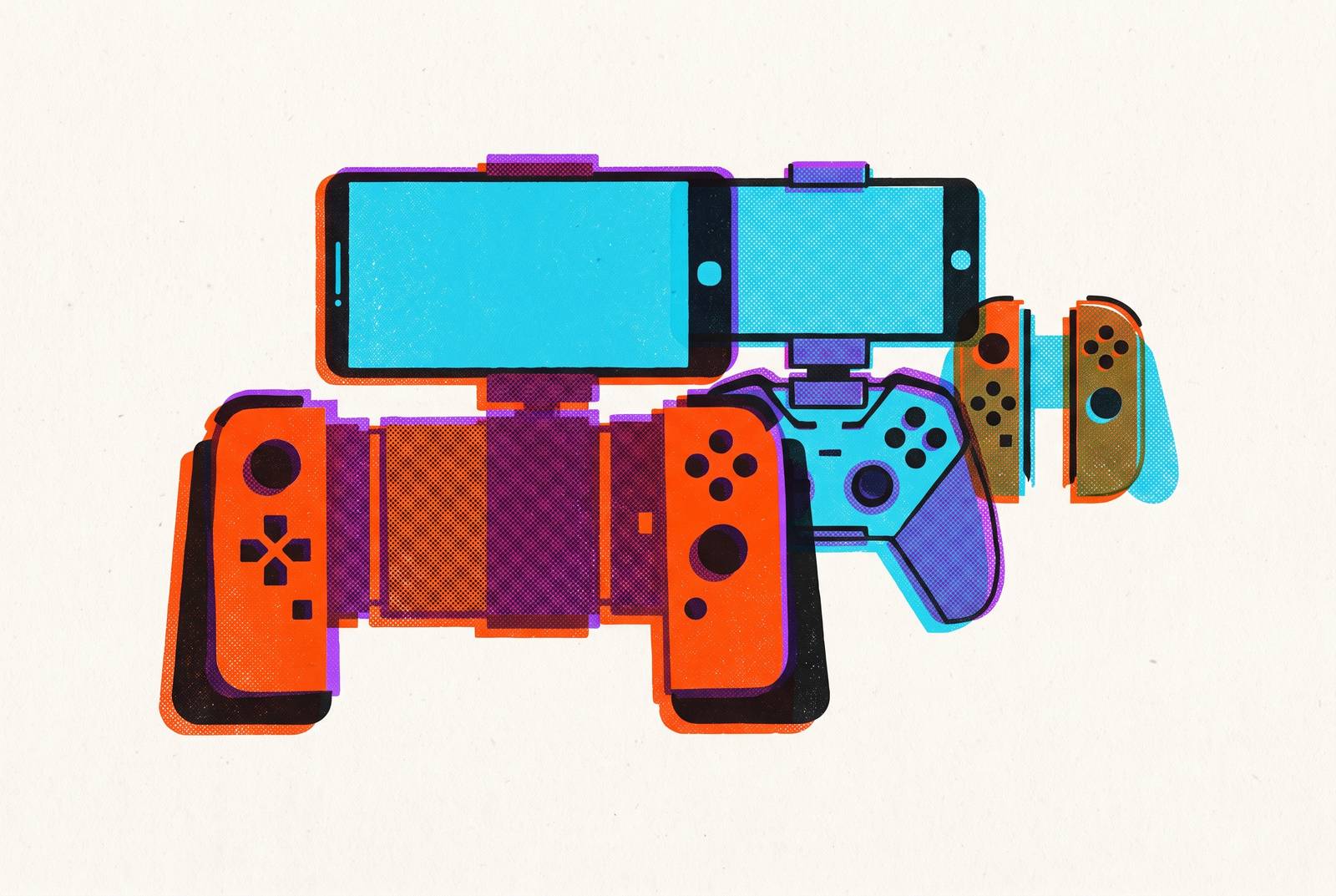
Mobile gaming now pulls in more revenue worldwide than PC and console gaming combined, and more people play on phones than on either platform. The catch: the genre mix changed. Competitive shooters, sprawling open-world RPGs, and cloud-streamed AAA titles now sit next to the match-three games that used to define the category, and none of them play well on a touchscreen where your own fingers block half the action. That gap between what a phone can run and what a thumb smearing across glass can actually deliver is why controller hardware went from niche accessory to a real buying decision. The questions worth asking now are which controller to get, and what standard should decide it.
Why setup simplicity and app ecosystem are the right criteria to rank by
Most controller reviews grade on build quality, button feel, or latency measured in milliseconds. Those numbers matter, but they miss the two moments that actually decide whether a controller earns a permanent spot in someone's bag or ends up buried in a drawer within a month.
Moment one is the first five minutes: unbox it, connect it, launch a game. Does it just work, or does it demand a firmware update, an account, a companion app install, and a small prayer?
Moment two covers every session after that. The software around it either makes the games better, or it sits there being a plastic clamp with buttons.
Setup simplicity breaks into four checks. Physical fit: does it take most phone sizes and cases without tools or adapters. Connection type: USB-C wired plug-and-play versus a Bluetooth pairing dance. Driver behavior: does the first game start without a PC update or a new account first. OS recognition: does iOS or Android see it instantly as a standard input device. App ecosystem covers companion app quality, cloud and remote play compatibility across Xbox Cloud Gaming, PS Remote Play, GeForce NOW, and Steam Link, plus firmware updates and mapping tools that keep working after the honeymoon period ends.
Here's the position worth stating plainly, since most review columns won't: latency benchmarks and thumbstick materials get the bulk of the column inches and deserve maybe a third of it. Setup simplicity and app ecosystem deserve the rest. A controller that nails both axes gets used constantly; one that fails either axis, no matter how good its triggers feel under a finger, gets left behind in a drawer, and no spec sheet fixes that.
What made plug-and-play a realistic promise rather than marketing copy
Three things had to happen at roughly the same time for "plug and play" to become an accurate description.
First, USB-C unification. Apple's shift to USB-C on recent iPhone generations erased the old Lightning-versus-USB-C split that used to force buyers into picking a platform-specific controller before they even knew what games they wanted to play. A single wired controller now physically fits almost any modern phone, which sounds small until you remember shelves used to stock an "iOS version" and an "Android version" of the same product just to cover both plugs.
Second, sensor upgrades. Contactless Hall effect and TMR thumbstick sensors replaced the cheap potentiometers that caused stick drift, the twitchy phantom input that made analog sticks degrade with age. That upgrade brought mobile controller hardware close to parity with higher-end console gear, and it didn't add setup steps to get there.
Third, and quietly the most important part: the operating systems caught up. iOS, since version 13, and modern Android both recognize standard HID controller profiles natively; no driver install, no side-loaded app just to get a button press registered. Google Play also tightened its compliance rules, so a game labeled "controller-supported" has actually been tested against a standard input layout rather than just slapped with a badge and shipped.
Bluetooth latency on flagship Android phones has also dropped meaningfully in recent years — benchmarked averages fell from around 92ms in 2022 to around 63ms in 2025 — to the point where casual and even a good chunk of competitive play feels fine over Bluetooth now. Put those three pieces together and the floor for "plug in and it works" has risen high enough that the real differences between controllers live further up the stack: companion software, ecosystem depth, and how the thing feels in your hands for three hours straight.
Tier 1 — fastest to first game, richest software experience
The top tier is where both axes score high at once, with neither one propping up the other.
Swappable magnetic adapters solve the single most common first-use headache: fitting a case-covered phone into a clamp without prying the case off first. Pass-through USB-C charging and a 3.5mm headphone jack mean nothing gets given up to make room for the controller. The companion app here works as an actual gaming hub: game discovery, clip recording, social sharing, and direct shortcuts into Xbox Cloud Gaming, PS Remote Play, GeForce NOW, and Steam Link. Reviewers describe this software layer as the strongest in the category, where the sharing and social features feel built in rather than bolted on after the fact.
Worth flagging honestly: base models in this tier often ship with standard thumbstick sensors instead of Hall effect, and the companion app tends to surface a subscription upsell somewhere along the way. Neither one is a dealbreaker, though neither one is nothing either.
The ergonomic work behind this tier isn't an afterthought. The Backbone Pro pairs Hall effect sensors and pass-through charging with a companion app that deepens the cloud and remote play experience. That's the Tier 1 formula: box to actual gameplay in under a minute, backed by software that expands what a phone can do.
Tier 2 — strong setup with software caveats or vice versa
Tier 2 is where hardware and software stop moving together. One axis is strong, the other lags, and which direction that trade-off runs changes who should buy in.
Some controllers here earn praise for game discovery, sharing, and party features that reviewers rank as genuinely close to the top tier, and compatibility that stretches to Nintendo Switch widens the use case well past phones alone. What's missing is brand ecosystem depth: the companion app is decent, but it isn't curated with the same care, and the price tag reflects that gap. The value case rests entirely there: priced low enough that a wrong guess doesn't sting, good enough that most people never regret the purchase.
Other controllers in this tier flip the trade-off. A clip mechanism that snaps on without knobs or fiddly plugs, a Bluetooth-or-USB-C connection choice, and battery life long enough to make it the obvious pick for travel or marathon sessions away from an outlet. Fast charging adds real convenience on top. But the app ecosystem here runs noticeably thinner than the wired plug-and-play options above it, which makes this the better fit for someone who cares more about hardware convenience than software depth, full stop.
A third variety solves a problem nobody else on this list touches: fitting large tablets, including iPad Pro, in a single clamp built for that size class. The cost shows up in the companion app, which reviewers flag repeatedly as the weak point, unable to match the all-in-one experience up in Tier 1. Enough users skip the app entirely that it's fair to ask whether it needs to exist at all. That's the throughline for Tier 2: hardware that earns its price tag, next to a software gap that keeps it out of the top spot under this framework.
Tier 3 — portable and affordable but with real setup trade-offs
Tier 3 trades setup convenience for size, price, or breadth of compatibility. Buyers need to walk in knowing exactly which trade-off they're signing up for, because this is the tier where the framework's two axes actually pull apart.
The smallest, lightest controllers in this category are pocketable in a way no clamp-style design can touch. They pair over Bluetooth with Android, PC, macOS, and even Nintendo Switch, and that breadth is the entire pitch. There's no phone clamp included, so a separate mount or stand becomes mandatory gear rather than an accessory, and Bluetooth-only connections mean latency that shows up in fast-reaction genres even if it's invisible in slower ones. Older models in this style needed PC-only firmware updates in the past, so checking for over-the-air update support before buying is worth the two minutes it takes. Best fit: casual players, frequent travelers, or anyone who already owns a phone stand and just wants a small, flexible pad.
Then there's the option a lot of people already own without realizing it doubles as a mobile controller: a standard console gamepad paired with a phone clip. An Xbox controller or a DualSense pairs over Bluetooth in seconds and gets recognized natively by both iOS and Android, and the software compatibility might be the widest of anything covered here, since every cloud service and remote play app supports these input layouts by default. The friction is entirely physical: a separate clip is required, clip quality varies wildly from one cheap Amazon listing to the next, and the combined rig ends up bulkier than any integrated design. Worth flagging for DualSense owners specifically: adaptive triggers and haptics only work over PS5 Remote Play, and drop back to standard controller behavior on every other service. This path makes sense for someone who already owns the controller and just wants to stretch its life onto a phone, not someone shopping from scratch.
The pocketable pick and the recycled console pad both solve one narrow problem apiece: pocket space, or a controller already sitting in a drawer. Fine goals, with a ceiling well short of Tier 1.
How cloud gaming service compatibility should factor into the choice
Cloud gaming stopped being a niche add-on and became a baseline expectation for a lot of players. Xbox Cloud Gaming recently added full mobile controller support, and PlayStation Plus Premium introduced native DualSense passthrough for select Android devices. Both are signals that the major platforms now treat phone-based play as a real product line.
Each service leans toward certain hardware. Xbox Cloud Gaming favors Xbox-layout or XInput controllers, and most wired USB-C pads work natively with zero setup steps. GeForce NOW is the most permissive of the group, working with practically any Bluetooth or wired controller, and NVIDIA recommends Bluetooth on mobile for the overall experience rather than raw latency. PS Remote Play works best with a DualSense or DualShock layout, though availability on Android varies by controller platform, a gap worth checking before assuming full access to the Sony ecosystem. Steam Link and Steam Remote Play offer the broadest compatibility of the group through Steam Input, working with most controllers with no extra setup at all.
Connection type still matters here no matter the service: wired USB-C delivers the lowest input latency, and Bluetooth adds a small delay that's fine for most genres but gets felt in fast, competitive play. Every service also publishes minimum bandwidth requirements for its quality tiers, so checking home and mobile network speeds before spending money on premium hardware saves a lot of buyer's remorse down the line. The practical move: figure out which service actually gets used most, then check that service's compatibility list against the tiers above. The ranking shifts depending on whether Xbox, PlayStation, or PC streaming is the priority, and pretending otherwise just leads to buying the wrong controller twice.
iOS versus Android differences that affect which tier is right for a given player
On iOS, MFi certification is the standard that matters, and Apple's program expanded USB-C controller support alongside recent iPhone generations. Apple Arcade offers a library of games built around gamepad input specifically, titles like Sneaky Sasquatch that were designed with a controller in mind from day one rather than patched in later. The ecosystem runs more closed here, but that closure buys consistency: an MFi-certified controller behaves predictably across iOS versions in a way that's harder to guarantee elsewhere. One tip worth repeating: check that a manufacturer lists support for the specific iOS version in use, not just a vague "iOS compatible" sticker on the box.
Android runs more open. It supports emulators alongside native titles, and Android device makers have improved HID stack handling across recent hardware generations. Popular controller-supported titles here include Call of Duty: Mobile, Roblox, and Grand Theft Auto: San Andreas, a mix that spans competitive shooters and open-world classics from a decade ago still getting new life on a touchscreen. PS Remote Play availability varies by controller platform on Android specifically, so that's worth checking before assuming Sony ecosystem access carries over cleanly. And as mentioned earlier, Bluetooth latency improvements on flagship Android phones have narrowed the wired-versus-wireless gap considerably, though wired still edges out Bluetooth for anything genuinely competitive.
For anyone splitting time across iOS, Android, and PC, Bluetooth version compatibility becomes the detail that matters most, since wired USB-C controllers need their fit and adapter support checked across both ecosystems separately. Controllers built on broad HID compliance with no platform-specific firmware dependencies tend to score best in this cross-platform scenario, simply because they don't force a choice.
How to apply the two-axis framework to your actual buying decision
Start with setup simplicity as a filter. If a controller needs a separate clip accessory, a PC-only firmware update, or a multi-step Bluetooth pairing process before the first session even starts, that friction doesn't go away after week one. It repeats every time the phone comes out of a pocket.
From there, the real question is what the software layer actually needs to do. Cloud gaming as the main use case means service compatibility and latency matter more than app polish. Game discovery and social sharing as the priority flips that entirely: the companion app becomes the main differentiator. Multi-device use across platforms shifts the calculus again, favoring broad HID compatibility and OTA firmware support over any single platform's ecosystem depth, no matter how good that ecosystem looks on paper.
Budget matters too, and here's the call worth making plainly: Tier 2 controllers deliver most of the Tier 1 experience for less money, and for most buyers that's the right one. The gap is real and mostly visible in the companion app's polish, but for casual play it barely registers day to day. Paying more for Tier 1 makes sense once cloud gaming, social sharing, or ecosystem depth actually gets used on a regular basis. Paying more just for the badge on the box does not, and that's the mistake worth naming outright: people buy the flagship name and use maybe a third of what it does.
Physical form factor and everyday convenience deserve the same weight as any latency benchmark, maybe more, and the controller that stays in a pocket earns its keep accordingly. Most people already carry a phone capable of running real games. The right controller is just the last piece that makes it feel that way.