Handheld Gaming PC Under 300 Dollars Worth Buying
Android and Linux devices deliver better value than pricey Windows PCs in this budget bracket.
The handheld gaming market under $300 splits into two very different worlds. Real Windows PC handhelds mostly live above that line in 2025 and 2026, while Android and Linux devices, plus a few clever workarounds, fill in everything below it with options that are worth actual money.
Look at where the top of the market sits right now. The Asus ROG Xbox Ally X runs $999.99 and Tom's Hardware calls it the best Windows pick going. The Lenovo Legion Go S, at $829.99, takes the crown for SteamOS performance. Those numbers aren't outliers. PC Gamer's ongoing price tracking has shown the memory crisis pushing handheld prices up across the board, so a "budget" Windows handheld in 2026 often just means "slightly less absurd than the flagship." Under $300, buyers are choosing between Android emulation machines, one lone Windows exception, a cloud-first Android box, and Nintendo's walled garden. This piece maps out what each of those actually gets you, and how to figure out which one matches the way you actually play.
The one Windows handheld that actually fits the budget: AYN Loki Mini Pro at $279
If genuine Windows compatibility matters to you, and it should if you want Steam, Game Pass, or Epic without workarounds, the AYN Loki Mini Pro is the only real contender under $300. As of March 2026 it sits at $279 for the Intel configuration or $299 for AMD, and AMD is the one worth buying for gaming. The Intel version, worth mentioning only because it almost existed, got canceled before launch, so what's actually on shelves is the AMD Mendocino chip with an RDNA 2 integrated GPU, the Radeon 610M.
Here's the catch, and it's a real one: that GPU only has two compute units. Two. That's a meaningful bottleneck for anything beyond older or lighter titles, and buyers should walk in knowing the frame rates won't chase anything close to what a $999.99 Xbox Ally X delivers. The screen is a 6-inch 1080p panel, respectable but not premium.
What you're actually paying for is the Windows license and everything that unlocks. Xbox Cloud Gaming, GeForce NOW, and a wide range of other cloud services open up because the OS underneath is the same one running on a gaming laptop. That's the trade. Less raw horsepower, a display that won't wow anyone, but a genuinely open platform. Think of it less as a baby Xbox Ally X and more as the cheapest door into the PC handheld category that still counts as a PC.
The strongest Android handheld under $300: Retroid Pocket 5 at $209
The Retroid Pocket 5 runs $209 direct from GoRetroid.com (regular price is $219), and for that money it's hard to find a better argument in the Android tier. Under the hood sits a Qualcomm Snapdragon 865 with 8GB of LPDDR4x RAM, paired with a 5.5-inch AMOLED display at 1920x1080. The battery is a 5000mAh cell, and the whole unit weighs around 280 grams while measuring roughly 7.8 x 3.0 x 0.6 inches. That's light for a screen this size, and it shows in longer sessions.
What can it actually run? PS2 emulation holds at full speed, which is no small thing for a device this cheap. It'll push into Switch territory too, though expect compromises there: dropped frames, tuning required, occasional stutter on demanding titles. Nobody should buy this expecting flawless Switch emulation, but as a ceiling, it's a genuinely impressive one for the price.
Battery life under an Antutu stress loop lands around 4 hours and 15 minutes, though everyday mixed use (menus, lighter emulation, some idle time) stretches well past that. The sticks use Hall-effect sensors, confirmed in the official spec sheet, which matters more than it sounds: magnetic sensing means no physical contact wear, so stick drift, the plague of cheaper handhelds, isn't something owners need to worry about down the line.
Cooling is active, with a fan that measures 58 dB on Sport mode and peaks at 62 dB, though lower fan modes run noticeably quieter. Max recorded temperature under Sport mode sits around 42°C. Noise-sensitive players, take note: Sport mode is audible enough to matter in a quiet room. The Pocket 5 delivers more raw power at a lower price than the Logitech G Cloud, which regularly sells for $299, a comparison worth sitting with given how close those two devices are in what they attempt to do.
There's also a Retroid Flip 2 for anyone who wants the same Snapdragon 865 (or an optional MediaTek Dimensity 1100) in a clamshell shell with a folding form factor. Same processing ceiling, different pocket footprint. And on ergonomics, the Pocket 5's curves are built for long sessions rather than quick five-minute bursts, which is exactly the kind of detail that only shows up after an hour of holding the thing.
The entry-level retro option: Anbernic RG35XX H at around $80
At roughly $80, the Anbernic RG35XX H isn't trying to compete with anything above it on this list, and that's precisely the point. The screen is a 3.5-inch IPS panel at 640x480, which sounds low-res until you remember this device exists to run NES, SNES, Sega, Game Boy, and PlayStation 1 titles, none of which were designed for anything higher.
Inside sits an H700 quad-core ARM Cortex-A53 chip with a dual-core G31 MP2 GPU and 1GB of LPDDR4 RAM. Modest numbers, but modest is the whole design brief here. Storage expands up to 512GB via card, meaning the actual game library lives on a microSD card rather than anything baked into the unit, so buyers can swap libraries the way people used to swap cartridges.
Over 20 emulator cores ship supported, covering the classic console spread that retro fans actually want. The unit weighs 155 grams, light enough to hold for hours, and the eight-directional D-pad registers cleanly, which matters a lot more than people expect once a fighting game or precision platformer enters the picture.
Community firmware options, muOS and KNULLI chief among them, keep the XX line alive well past its original release window. That's a real advantage: Anbernic ships new handhelds every couple of months, an iteration pace that would make anyone's head spin, but the RG35XX H has settled into a stable, well-documented place in that lineup. Buyers chasing the newest release should think twice; buyers who want a proven device with an active support community should look at exactly this one.
The main rival at this price is the Miyoo Mini Plus, which trades dual analog sticks and a slightly better D-pad for a lighter body and Onion OS. Both are legitimate, and the choice mostly comes down to whether analog sticks matter for your library. This tier isn't about streaming or modern gaming. It's about maximum classic-game depth for minimum money, full stop.
The mainstream pick: Nintendo Switch OLED at $299
The Nintendo Switch OLED was on sale for $299 at Walmart as of August 2025, a price point that makes it the most accessible entry into Nintendo's ecosystem on this list. Context worth sitting with: Nintendo's Switch family has shipped 156.59 million units as of 2026, a number that explains why third-party developers keep showing up even when the hardware itself isn't chasing raw power.
The OLED panel is the real upgrade over both the standard Switch's LCD and the Lite's smaller display, and if handheld mode is where most of your play happens, that screen difference alone justifies the price gap. At 322 grams with a 4310mAh battery, life runs anywhere from 4.5 to 9 hours depending on what's running. Lighter games like Hades or Hollow Knight stretch close to 9 hours; something as demanding as Zelda: Tears of the Kingdom pulls that down to around 5.
The library is arguably Nintendo's strongest ever, mixing first-party exclusives with indie and third-party heavyweights running natively. That's the draw. The catch is the ecosystem lock: no Steam, no PC storefronts, no access to third-party PC storefronts or cloud gaming platforms like Xbox Cloud Gaming or GeForce NOW.
For accessory shoppers, the CRKD Nitro Deck 2 is worth a mention: built for the Switch 2 but backward compatible with the Switch and Switch OLED, it uses a capacitor-based zero-contact sensor technology called CaptiStick that's engineered specifically to eliminate stick drift, and it extends to PC, mobile, and smart TV use. This is the safest, most plug-and-play pick on this whole list. Safe comes with real constraints, though, and buyers should walk in knowing exactly what door they're closing.
The cloud-gaming specialist: Logitech G Cloud at $299 (and cheaper used)
At full price the Logitech G Cloud runs $299, down from its $349 launch price, but the more interesting number here is $175.76: that's what an Amazon Resale "like new" unit went for as of November 2025 after a 30% checkout discount. At that price, the calculus shifts considerably.
The specs: a 7-inch IPS display at 1080p and 60Hz with multi-touch, weighing 463 grams, and a battery rated at over 12 hours. That battery figure is genuinely class-leading among the devices on this list, and it's the single biggest reason to consider the G Cloud at all. Haptics, a gyroscope, and remappable controls round out the hardware, and because it runs Android underneath, the Google Play Store comes along with it.
Cloud services are built in natively: Xbox Cloud Gaming (still in Beta) and NVIDIA GeForce NOW both run without workarounds, and the device also handles Xbox Remote Play through its respective app. The limitation that actually matters: no 4G or 5G support anywhere on the device. Cloud gaming here means Wi-Fi or nothing, which narrows the usefulness considerably for anyone who wanted this as a true on-the-go machine.
Some critics have pointed out the G Cloud occupies a niche that's arguably thinner than it looks: it does less than a general-purpose Android handheld while requiring ongoing subscriptions to unlock its actual value. That's a fair critique at $299. At $175.76 used, though, the argument softens considerably. A 12-hour battery and clean build quality get a lot easier to defend once the price is roughly halved. This is a device for someone whose gaming already happens through the cloud at home or on a known network, and who isn't looking for a device that moonlights as anything else.
How cloud gaming and remote play change what these devices can actually do
None of the devices above make full sense without understanding how cloud gaming reshapes what "budget handheld" even means. A $209 machine offloading the heavy processing to a remote server can run games its own chip could never touch natively, and that changes the entire value equation for this price bracket.
Compatibility splits cleanly along OS lines. Windows handhelds like the AYN Loki Mini Pro get the broadest access: Xbox Cloud Gaming, GeForce NOW, and a broader range of cloud gaming options than Android devices. Android devices, the Retroid Pocket 5, the Logitech G Cloud, and Anbernic units running Android, get most of that same list minus PlayStation Cloud Gaming, which Sony has kept locked to its own PlayStation's own dedicated hardware for its streaming services.
Remote play software fills the rest of the gap on Android. Steam Link, Moonlight, PS Remote Play, and Chiaki collectively let an Android handheld reach into a home PC or console library over a local network, effectively turning the handheld into a window onto hardware that's already sitting at home. That's a meaningfully different use case from cloud gaming proper, but it stacks on top of it rather than replacing it.
The cloud catalog keeps growing, too. Palworld's full 1.0 release landed simultaneously on Cloud, Console, and PC for Game Pass subscribers on July 10, 2026, which is one recent example of new, full-scale titles arriving on cloud platforms rather than skipping them. For anyone streaming through a browser instead of a dedicated app, modern browsers can serve as a fallback for cloud gaming if you're running a G Cloud or Pocket 5 without the native client installed. And for players who dock their handheld to a television, GeForce NOW supports up to 4K at 60Hz on compatible Samsung Gaming Hub models, extending the same subscription across two very different screens.
Put plainly: a $209 Android handheld paired with a Game Pass or GeForce NOW subscription can reach a library of current, demanding titles that its own Snapdragon 865 couldn't render if its life depended on it. The hardware stopped being the ceiling. The subscription became the ceiling instead.
The smartphone-plus-controller alternative that the other options don't mention
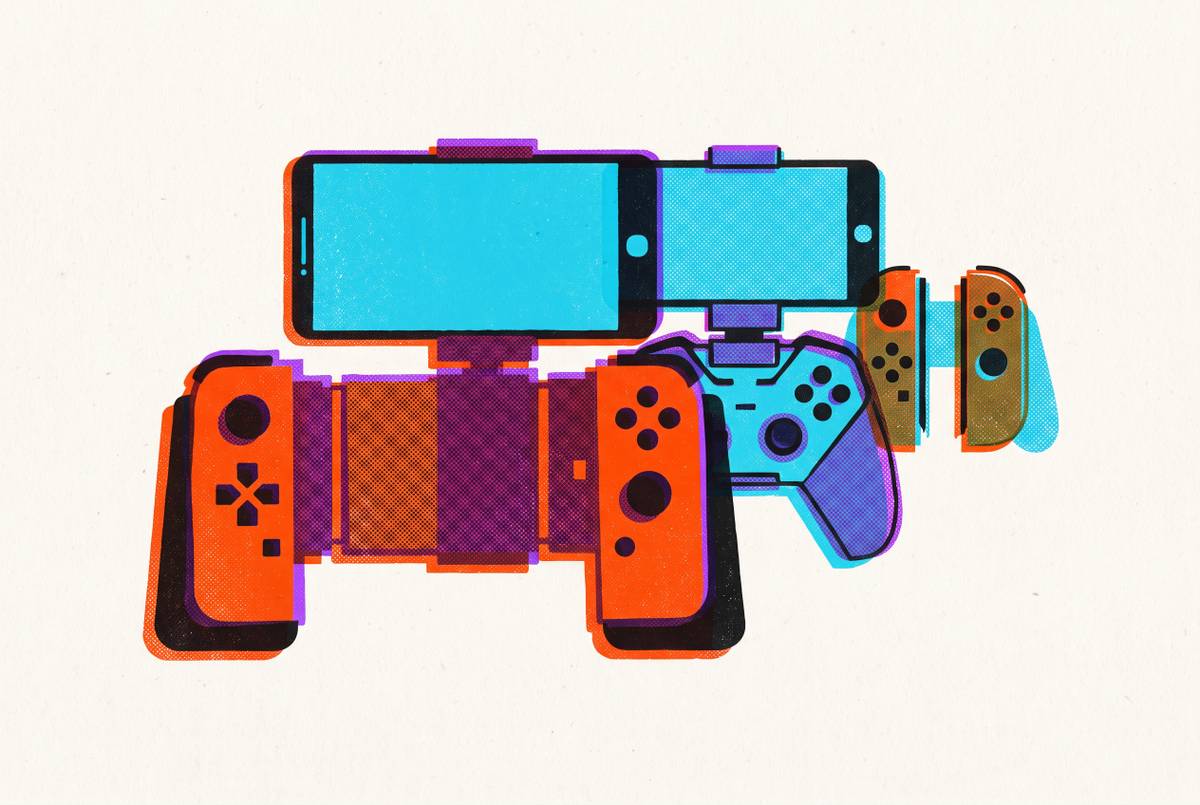
Every device covered so far asks you to buy new hardware. There's a cheaper path that skips that step entirely: pair a mobile controller with the smartphone already sitting in your pocket.
Consider what that phone is packing. Backbone, for instance, makes controllers designed specifically to turn a smartphone into a handheld console for exactly this kind of play. The Retroid Pocket 5's Snapdragon 865 was a flagship chip when it launched, and current smartphone processors have moved well past it in raw capability. That gap matters because cloud gaming compatibility on a phone matches, and in most cases exceeds, what a dedicated Android handheld offers: Xbox Cloud Gaming, GeForce NOW, Steam Link, PS Remote Play, the identical service stack running on a screen that's already paid for.
So the real comparison isn't handheld versus handheld. It's a $209 to $299 dedicated device versus a controller that clips onto hardware you already own and charge every night anyway. No second battery to manage, no separate unit gathering dust in a drawer six months from now, and full access to every phone-native app running alongside the same cloud services the dedicated handhelds offer. This setup suits players whose gaming leans heavily on cloud or remote play, who travel often and don't want to pack two devices, or who'd rather consolidate everything into the one screen they're never without.
How to choose between these options based on what you actually want to play
The device should follow from what you actually want to play, not the other way around. That sounds obvious, and yet it's the single most skipped step in most buying decisions at this price point.
Chasing retro depth on the smallest possible budget, with no interest in subscriptions or streaming? The Anbernic RG35XX H at roughly $80 remains unmatched for classic-game breadth per dollar, backed by active community firmware that keeps extending its life well past its original release window.
Want emulation up through PS2 and partial Switch coverage, the best Android hardware in this range, and ergonomics built for long sessions? The Retroid Pocket 5 at $209 is the strongest all-around case in the Android tier. Hall-effect sticks and active cooling aren't cosmetic upgrades here; they're the reasons this device outlasts cheaper alternatives.
Need genuine Windows access, PC storefronts, and the full cloud gaming lineup including PlayStation Cloud? The AYN Loki Mini Pro at $279 is the only real option, so long as expectations on raw performance stay realistic next to something like the $999.99 Xbox Ally X.
Drawn to Nintendo's exclusive library and want the simplest possible setup with no fiddling? The Switch OLED at $299 delivers that, at the cost of PC and cloud flexibility that this device was never built to offer.
Living a cloud-and-stream lifestyle, want the best battery life on this list, and willing to buy used? The Logitech G Cloud, found around $175.76 on the resale market, makes a stronger case at that price than it does at $299, so long as Wi-Fi-only streaming fits how you actually play.
And if a modern smartphone is already in your pocket, prioritizing cloud and remote play over dedicated hardware, a mobile controller alone might beat every device on this list. The subscription stack is identical either way. The only real investment left is a controller, not a second screen to charge, carry, and eventually replace.