Refurbished vs New Gaming Console Buying Considerations
Manufacturer certification and warranty terms matter far more than the "refurbished" label itself.
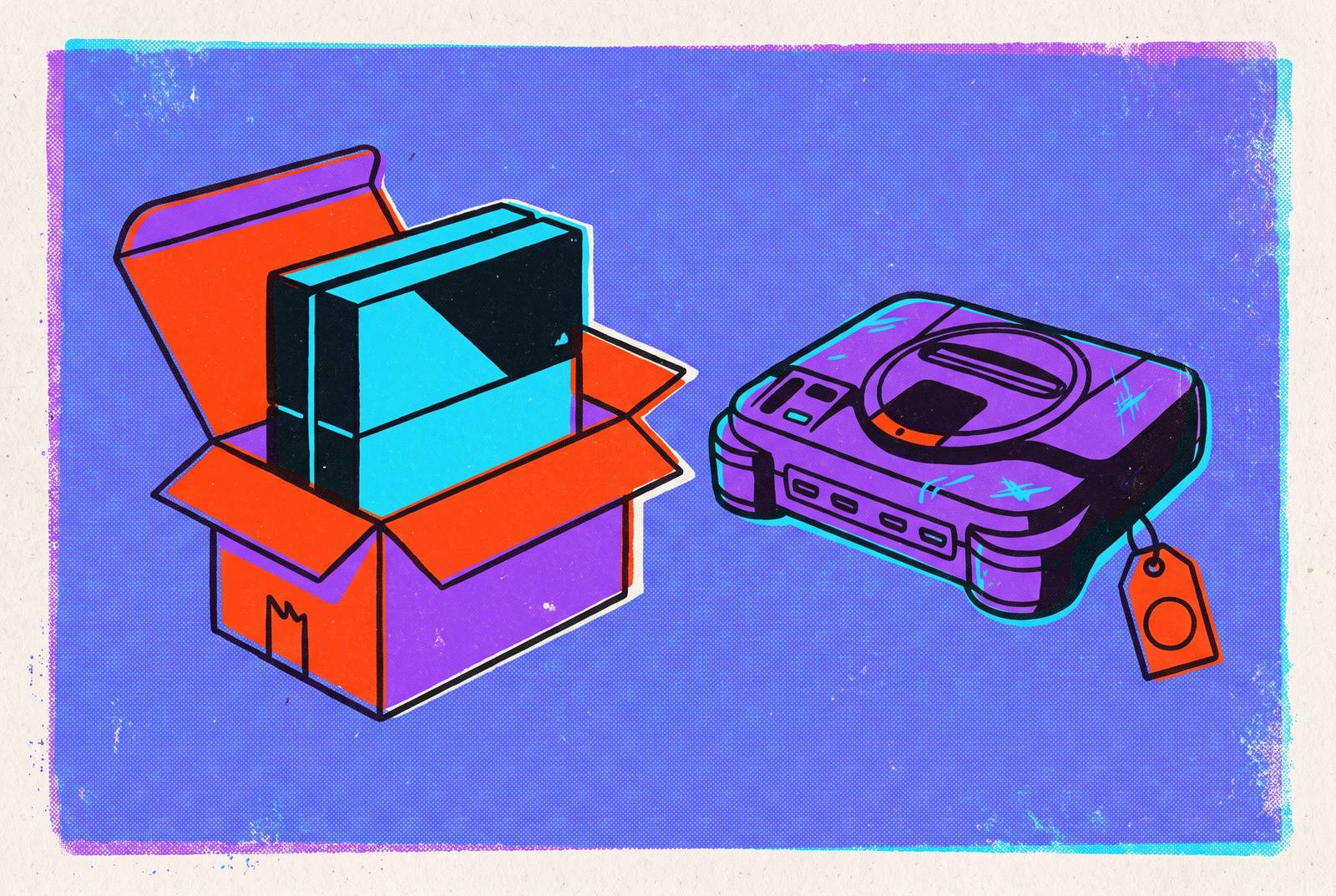
Most people shopping for a console ask one question: refurbished or new? Who refurbished the unit, what warranty applies, what ships in the box, and whether a console is even the right device for the job have almost nothing to do with the word "refurbished" itself.
That word is not regulated. It can describe a console that was opened, found defective, fully repaired and re-certified by Sony or Microsoft, or it can describe a unit a previous owner barely touched before sending it back for a refund, wiped down, and relisted. Both get the same four syllables on the listing page. A manufacturer-certified refurb and a stranger's "refurbished" listing on a marketplace app share a label and very little else, so the rest of this piece skips straight to the variables that actually separate a good purchase from a gamble.
What "refurbished" means at each tier of the market
Three tiers exist in the refurbished console market, and conflating them is where most bad purchases start. At the top sits manufacturer-certified refurbishment: Sony and Microsoft take back defective or returned units, repair them to original specification, and resell them directly. Below that sits retailer refurbished, sold through outlets like Best Buy, GameStop, or Amazon Renewed, where the depth of inspection and the warranty terms vary meaningfully from what the manufacturers themselves offer. At the bottom sits seller refurbished: an individual or small reseller cleaned a unit, powered it on, called it good, and listed it with no standardized process behind that claim and no guarantee of what "refurbished" meant in practice.
The hierarchy matters because performance does not scale with price the way people assume. If a console is properly refurbished, at any of the reputable tiers, it runs games just as fast and renders the same graphics as a new unit off the shelf. You will not see a refurbished penalty in frame rates or load times. What changes across tiers is risk: a scuffed shell or a faint scratch on the case is cosmetic and irrelevant to how the machine plays, but a seller who skipped internal diagnostics is a different kind of gamble entirely, one that has nothing to do with how the console looks and everything to do with what nobody checked before it shipped.
The warranty and return policy are the real purchase decision
More than price, more than tier, more than the seller's star rating, warranty terms are what decide whether a refurbished purchase is safe or reckless. Sony's PlayStation Direct certified refurbished program includes a one-year limited warranty. Microsoft's Microsoft Store certified refurbished Xbox consoles come with just a 90-day limited warranty, and Microsoft handles any claims itself. Two companies sell the same category of product, backed by warranties that differ by nine months, and neither discloses this prominently enough that most buyers notice before checkout.
Third-party refurbishers handle their own claims, and that arrangement is only as good as the company standing behind it. If a warranty takes six emails and a shipping label to use, it is functionally weaker than a shorter warranty from a company that answers the phone. Return policy is a separate protection from warranty coverage, and it matters because it covers the window right after a box arrives, when you discover a drifting joystick or a scuffed port that no listing photo showed. New consoles sidestep all of this because they come with a full manufacturer warranty, typically a year, and nobody else has touched the hardware. That peace of mind is real value, not a marketing add-on, and it deserves an honest place in the comparison rather than a dismissal. The rule of thumb that falls out of all this is straightforward: if the warranty length and the return window are not spelled out in writing before money changes hands, the purchase is not worth the discount, regardless of how good that discount looks.
What's included, and the hidden costs that change the real price
You do not know the real price until you confirm the box contents. Refurbished consoles sometimes ship without the controller, the HDMI cable, or the power brick, any of which has to be purchased separately to actually play a game, and all three are the bare minimum for a working setup. If you add a second controller and a replacement power brick to the cart, a unit priced below a new console can suddenly cost more than new.
Digital licenses complicate the math further. A refurbished console has been factory reset, and any digital games tied to the previous owner's account do not transfer. Physical games bundled into a listing stay with the console, but a digital library will not follow the hardware anywhere. You also have to weigh what new consoles bring to the table during holiday season: bundles that throw in a game or a second controller can push the effective value of a new purchase below the price of a bare refurbished unit once you price accessories in separately. The only honest comparison is total cost after accessories, not the number printed on the box.
How to inspect a refurbished console before committing
Every refurbished console is worth a basic check on arrival, even one with a manufacturer certification, and you should scrutinize third-party or seller units even more. Look closely at the HDMI port first: bent pins are a common failure point on used PS5 units, and a quick glance at a listing photo will not show that kind of damage. Confirming that the console has been factory reset and carries no ban from PSN or Xbox Live matters just as much: a banned console still plays games locally, but it cannot go online, and for most buyers that single limitation defeats the purpose of owning the thing. If you are buying through a third-party seller or a marketplace listing, the return policy needs to be active and documented in writing before you send any money, and you should check the seller's review history as baseline work, not an optional extra.
When buying new is clearly the right call
Refurbished is not the default right answer, and a handful of scenarios make new the obvious choice regardless of what the savings look like. A console bought as a gift belongs in this category first: the unboxing experience is part of the gift, and no amount of careful refurbishment replicates a sealed retail box under a tree. A console that just launched belongs here too: the refurbished market for a brand-new generation is thin and prices have not had time to settle, so the supposed savings are small and the selection is thin as well. The last scenario is simple arithmetic: when a recent release, a limited edition, or a loaded bundle narrows the gap between used and new to a small enough number, the certainty and full warranty of a new unit are worth paying the difference for.
That last case points at something bigger than console condition. If the price gap between refurbished and new has nearly vanished, the better question is whether a console is the purchase that actually fits the way someone plays.
Whether a dedicated console is the right platform at all
For a meaningful share of buyers, the refurbished-versus-new debate is nested inside a bigger question that gets skipped: whether gaming requires a dedicated box under the television. Cloud gaming and remote play have matured enough that the answer, for some libraries and some players, is no.
The distinction that matters most across cloud services is business model, not brand loyalty. With GeForce NOW and Boosteroid, you stream games you already own from your existing libraries. Xbox Cloud Gaming and PS Plus Premium work differently: you stream titles from their own subscription catalogs alongside select games you personally own. Neither approach is better in the abstract; each solves a different problem depending on what a buyer's library already looks like. PS Remote Play adds another wrinkle: it is free to use, but it requires an actual PS5 or PS4 running at home, so it shifts the cost of access away from a second location without touching the cost of owning the hardware.
Hardware has started catching up to the idea that a console might be optional. Samsung TVs from 2022 onward and LG TVs from 2022 onward support Xbox Cloud Gaming and GeForce NOW natively, so if you pair a controller with a compatible smart TV, you can replace a console outright when your gaming is cloud-only. Genre still matters here: fast-twitch competitive games are far more sensitive to streaming latency than turn-based strategy or narrative single-player titles are, so the right answer depends on matching the platform to the actual library a person plays. None of this makes a console a bad purchase. A console only deserves consideration after the platform has been chosen.
Whether a dedicated console is the right platform matters more than the condition label on a listing, and for many players that answer hinges on flexibility and portability. A refurbished PS5 sitting under a television is tied to that television. But if you pair a smartphone with a mobile controller, it goes anywhere the phone does, turning a device already in your pocket into something closer to a handheld console, with no upfront hardware cost for a dedicated system.
Where a mobile controller fits into the platform decision
Once cloud gaming checks out for your library and play style, you need a controller built for a phone as the practical next step. The Backbone One plugs directly into a phone over USB-C and launches the Backbone App, which opens access to mobile games, Xbox Cloud Gaming, GeForce NOW, Amazon Luna, and other cloud services, with PS Remote Play available on the PlayStation Edition. None of it requires a separate console sitting anywhere.
Backbone Pro extends the same idea with wireless connectivity, longer battery life, and a more ergonomic grip, and it supports three ways to play: handheld on the phone itself, wirelessly over Bluetooth, or wired over USB-C into any screen. The Backbone App itself is the hub, letting a player jump straight into games on the phone or stream from the cloud, a console, or a PC, with no downloads and no secondary hardware needed for cloud titles. The library available through that app covers more ground than it might first appear: Xbox Cloud Gaming titles like Call of Duty: Black Ops 7 and Forza Horizon 5, Fortnite, PS Remote Play titles like Death Stranding 2, and a stack of native mobile games besides. That is roughly the same library breadth you would be weighing as a console shopper, available on hardware you are probably already carrying around.
Just as a refurbished console's real price only becomes clear once every missing accessory gets priced in, the real value of mobile gaming only becomes clear once the full hardware picture is counted: a smartphone, which most players already own, plus a controller that turns it into something console-grade. If you run that math against buying a refurbished console plus a second controller plus a replacement power brick plus an HDMI cable, the mobile path often comes out ahead, especially for buyers who were never going to need a television-anchored setup. Physical wear, like a bent HDMI port, a scuffed shell, or a connection that only works at a certain angle, is exactly the kind of thing that demands hands-on inspection before a refurbished purchase closes, and that inspection step simply does not exist for a controller clipped onto a phone someone already owns and can replace easily if something goes wrong.
A decision framework: matching buyer type to the right purchase
Every variable this piece has walked through, refurbisher tier, warranty length, what ships in the box, platform fit, maps onto a small set of buyer situations, and most readers will recognize their own somewhere in this list.
A buyer who wants a specific console, a PS5, an Xbox Series X, a Nintendo Switch, and cares about price should look first at manufacturer-certified refurbished through Sony's PlayStation Direct or Microsoft's Microsoft Store. You get the same console at a lower price, a slightly shorter warranty than buying new, and no difference in actual performance.
A buyer weighing a refurbished unit from a third-party retailer or a marketplace seller needs to run the full checklist before handing over money: warranty terms in writing, a documented return policy, every accessory confirmed present, the HDMI port and joysticks tested for drift and damage, and confirmation that the console is not banned from its network. If you skip any one of those checks, the discount stops being worth the exposure.
A buyer purchasing a gift, or shopping during a console's launch window, should buy new without a second thought: presentation and selection both favor it, and the refurbished market has not caught up yet in either case.
A buyer whose library lives mostly in the cloud, and who values being able to play somewhere other than a couch facing a television, has an option that sidesteps the entire refurbished-versus-new question: a smartphone paired with a Backbone One or Backbone Pro, opening up Xbox Cloud Gaming, PS Remote Play, GeForce NOW, and a library of native mobile titles, all running on hardware already sitting in a pocket. The platform must be chosen before the console, and for a growing number of players, the device that answers it best is one they were already carrying.