GeForce Now vs Xbox Cloud Gaming on Mobile
Hardware trumps games for PC owners; Xbox offers instant access for everyone else.
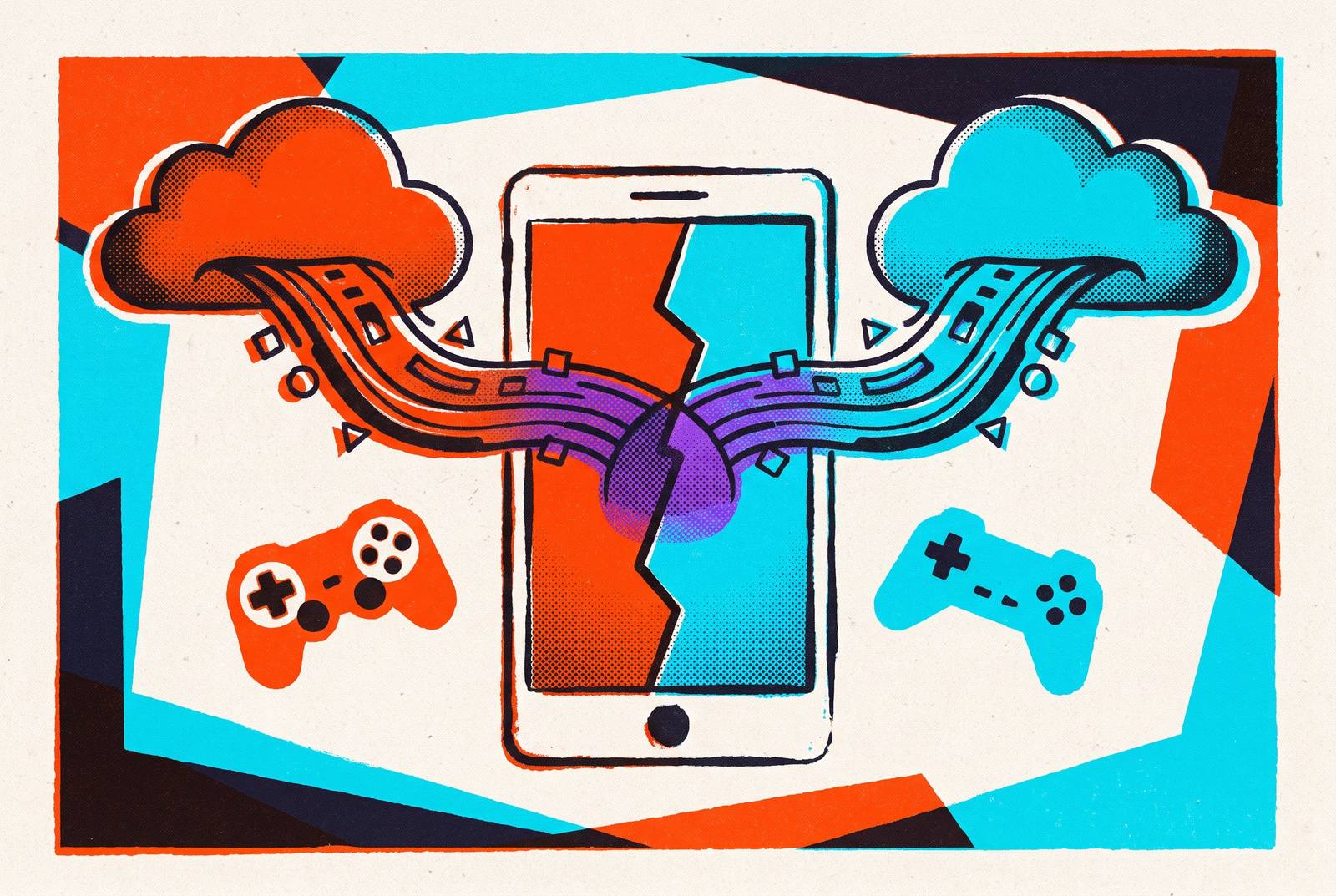
GeForce Now vs Xbox Cloud Gaming on mobile is less a contest between streaming services than a choice about what to rent. GeForce Now supplies powerful hardware for games you own, while Xbox Cloud Gaming supplies a library with the hardware included. That split is the clearest guide to which belongs on your phone, even as streaming quality, touch controls and new hour caps complicate the decision.
Why these two services are not actually competing on the same terms
These two services are frequently compared as if they were interchangeable, but their subscriptions buy different things. GeForce Now connects to accounts on stores including Steam, Epic, GOG, PC Game Pass and Ubisoft Connect, then streams supported titles from RTX-class cloud hardware. The games have to come from elsewhere. Xbox Cloud Gaming instead bundles a curated selection of games with the computing power needed to play them, so subscribers do not need to purchase those titles separately.
That distinction makes their shared entry price misleading. Someone with an established PC library is paying NVIDIA to make existing purchases playable elsewhere, while someone starting without games is paying Microsoft for something to play as well as somewhere to run it. One rents the machine. The other rents the stocked shelves. Before looking at any benchmark, the player needs to decide whether they need better hardware or games to play.
What each service actually delivers in streaming quality on a phone screen
GeForce Now Ultimate has the higher performance limit, using RTX 5080-class Blackwell hardware with ray tracing and DLSS 4.5 support. Xbox Cloud Gaming runs on custom Xbox Series X blade servers in Azure datacenters, so what it can render is limited by what that console generation can do. NVIDIA’s move to RTX 5080-class hardware in 2026 let the service do more at the same price, while Xbox’s top tier still streams at lower resolutions and frame rates.
On a phone, however, those capabilities are only part of the experience. A sharper image is useful, but it cannot compensate for controls that respond late. The screen shows the result. Input delay determines how convincingly the game responds to the player. GeForce Now’s quality advantage is real, yet judging it only by resolution treats an interactive game rather too much like a film.
The route into the service changes that experience, too. Where a native app is available, using it rather than a browser is the most consequential mobile variable, because browser-session latency can make precise input unreliable. Native apps keep the experience more responsive. But iPhone users have to use both services through Safari, with no native App Store app available.
The network then sets a separate pair of conditions. Bandwidth supports higher resolution, while low latency supports responsiveness, and an improvement in one does not establish the other. A fast connection can still be a poor gaming connection. For mobile play, the practical conclusion is that headline image quality becomes valuable only when the app or browser route and the network allow inputs to arrive promptly.
How both services moved from unlimited to metered cloud access in 2026
The shift toward monthly cloud-hour allowances is a shared 2026 change. NVIDIA moved first, making GeForce Now the natural benchmark when Microsoft announced its limits. Both companies give the same underlying reason. Cloud computing costs rise with usage, and metering is their mechanism for managing that expense at scale.
GeForce Now’s paid tiers include 100 hours a month, while Xbox Ultimate’s November 2026 cap is 15 hours. The hours matter differently to someone who mainly streams games and someone who uses the cloud now and then between local sessions.
Microsoft estimates that only a small fraction of subscribers will be affected by its cap, suggesting that most Game Pass members play locally. That estimate does not settle the question for a phone-first player. The relevant comparison is personal streaming use. Heavy users also face an information gap, because NVIDIA has published its overage pricing while Xbox’s is not yet published.
Starting in November, Microsoft is also separating cloud access from the library subscription. Players without Game Pass will be able to purchase streaming hours for titles they already own. This changes the original comparison without erasing it. Xbox Cloud Gaming is becoming two things at once, a way into a subscription catalog and a more standalone utility for playing owned games.
What each catalog actually covers and where each service has gaps
GeForce Now has the broader catalog by raw count, but ownership alone does not guarantee access. Publishers must opt in before their games can be streamed through the service. Some never do, and some games have taken years to arrive after launch. An extensive PC library therefore gives GeForce Now potential value.
Xbox’s smaller subscription catalog removes the need to buy its included games, but introduces a different boundary. Not every Game Pass title is available through cloud streaming, and the catalog rotates monthly. Availability today is not a promise for next month. On Ultimate, the large included selection and day-one access to Microsoft- and partner-published titles offer a particular advantage for players who want new releases without separate purchases.
The surprising part is that these models overlap. GeForce Now streams a significant portion of the PC Game Pass catalog, so a Game Pass subscription need not mean using Microsoft’s streaming hardware. NVIDIA’s help page states that active PC Game Pass or Game Pass Ultimate members can access games released on GeForce Now. Linking a Microsoft account opens access to supported Game Pass and Microsoft Store titles, rather than unlocking the entire catalog indiscriminately.
That hybrid arrangement separates the source of the game from the source of the machine. Some titles available through the same underlying Game Pass subscription can run through Xbox Cloud Gaming at its quality limit or through GeForce Now at higher fidelity. The distinction is useful rather than merely technical. It allows Microsoft’s library to supply the games while NVIDIA supplies the streaming hardware, though support remains title-specific.
GeForce Now also has an exception to the assumption that every player must arrive with purchases. It has over 100 free-to-play titles, including Fortnite, that players can use without owning games. That gives players another route into the service. It does not turn the paid hardware subscription into a bundled paid-game library, which remains the central catalog difference.
How the two services behave differently on a phone without a controller
For someone who wants to take out a phone and play without accessories, Xbox Cloud Gaming has the stronger proposition. A subset of its catalog supports touch controls, with custom overlays or game-rendered layouts in select titles. Those controls can fit the game being played. Those controls make casual mobile sessions genuinely usable, although touch support is not universal.
GeForce Now approaches the phone more like another screen for PC games. It offers a generic virtual gamepad and touch support in a small number of titles, but most of its library expects a physical controller or mouse-and-keyboard input. The touchscreen is not the library’s natural interface.
On iPhone and iPad, setup adds a shared qualification. Both services run through Safari, as Apple’s policies have shaped how cloud gaming reaches those devices, and adding the site to the home screen produces an experience that behaves similarly to a native app. NVIDIA requires iOS or iPadOS 15.4 or newer and states that a gamepad is needed to play, while making an on-screen virtual gamepad available that it does not recommend for long-term gameplay.
Xbox offers more ways to match input to the situation. It supports Bluetooth controllers including Xbox, PlayStation DualSense and DualShock controllers, plus mouse-and-keyboard input for select titles as well as its touch options. Both services use a lot of mobile data per hour, so a capped mobile plan can make it harder to play on the spur of the moment than the setup does.
Why a physical controller changes the experience on both services
For serious mobile cloud gaming, a physical controller is the shared foundation for both services. It is the single upgrade with the greatest effect on comfort, input precision and how long a session remains comfortable. Touch controls offer convenience, but they ask the screen to serve two jobs. A controller lets the phone just show the game.
That separation is especially useful when aiming precisely. Round-trip latency is harder to manage with touchscreen input than with analog sticks, and physical controls remove that extra touch-input disadvantage. They can make the latency differences between the services feel smaller in practice, narrowing the experiential gap while network delay and both companies’ hardware remain unchanged.
A USB-C clamp controller also simplifies the physical arrangement. The phone attaches directly to the controller, creating a single unit without a separate Bluetooth pairing step or the need for a stand. There is less to arrange before playing. For someone who plays often, hall effect or TMR stick sensors resist wear-based drift, which can help a controller stay worth its price over time.
GeForce Now adds one compatibility condition to that advice. Controller support depends on the individual PC game being streamed. Players should verify support before a session.
Which service fits which player, based on what they already own and how they play
For a player with a meaningful library on Steam, Epic, GOG or the Xbox store, GeForce Now is the more natural fit when those games are supported. Its bring-your-own model lets players pay for hardware to play the games they own on a phone without a gaming PC. This is the hardware-rental case at its clearest. It is especially persuasive for someone who already has a controller and wants the best available image quality.
For a player with few or no owned PC games, Xbox Cloud Gaming offers a more complete starting point. The subscription comes with a large set of games that changes over time, so players can start without buying games first. Day-one access strengthens that fit for followers of Microsoft- and partner-published releases. Its touch-supported games also give the casual player a way to begin without first buying an accessory.
Someone who expects to stream more than 15 hours a month will hit Xbox Ultimate’s November 2026 limit, while GeForce Now’s 100-hour allowance leaves more room for those who stream often. Occasional players may reach neither cap. For them, the usefulness of the included games or the convenience of touch controls can outweigh an allowance they would leave unused.
The hybrid player has a different priority, wanting Microsoft’s catalog but NVIDIA’s rendering quality. Playing supported Game Pass titles through GeForce Now suits that preference when managing two accounts is acceptable. Xbox’s move to sell streaming hours on their own also gives people who own games a way to play without Game Pass. These are not contradictions in the comparison, but consequences of treating games and compute as separate purchases.
But neither model suits an unreliable or high-latency connection. Both depend on stable, low-latency network conditions to deliver usable play, and no subscription tier can turn a poor connection into a good one.