When to Stop Buying Dedicated Handhelds and Just Use Your Phone
Phone gaming plus a controller covers most portable needs if your connection holds.
A dedicated handheld earns its place when it solves a problem your phone cannot. For most players, most of the time, a smartphone with a suitable controller already covers portable gaming. The crossover point depends less on which device looks more serious and more on session length, connectivity, library access, and whether gaming leaves enough phone battery for the rest of your day.
Why the handheld-vs-phone question is worth asking seriously in 2026
Dedicated handhelds once had a monopoly on gaming away from a TV. That monopoly is gone, but the buying reflex remains. Phone hardware, mobile libraries, and cloud services now offer credible answers to the handheld’s traditional advantages in portability, games, and controls. A separate device therefore needs a more specific justification than “this is how portable gaming works.”
That is not an obituary for handheld gaming. The hardware market is still innovating, and dedicated devices retain advantages that a phone cannot fully reproduce. Those advantages need to show up often enough in your actual gaming life to justify another purchase and another device in your bag.
What a phone can actually do for gaming in 2026, before any accessories
The strongest case for phone gaming starts with games that belong on a touchscreen. Monument Valley, Threes, Mini Metro, and daily crosswords need no apology for their format. They fit short windows without asking you to imitate a console controller on glass. Their simplicity of access is a design strength. For someone whose gaming happens between other activities, that can be more useful than a device built for uninterrupted play.
Stardew Valley mobile is a complete port of the PC version with well-adapted touch controls, making it a legitimate primary platform. There is no official PC cross-save, although manual save transfers are possible and unsupported. Slay the Spire’s touch interface supports full runs. Vampire Survivors suits one-thumb movement because attacks happen automatically, and its mobile port is content-complete despite lacking some PC features, including stage maps, the bestiary, and modding.
Vampire Survivors, Balatro, Slay the Spire, and Dead Cells offer a large volume of content for a modest combined outlay. Subscriptions to Apple Arcade and Google Play Pass are another way to play good indies. Netflix Gaming includes Red Dead Redemption at no extra cost with a Netflix subscription, though some games in its catalog can leave. Hades was removed in July 2025, followed by GTA: San Andreas, The Definitive Edition on December 11, 2025. The native library is substantial, but access and ownership are different promises.
How a physical controller closes the remaining gap between phone and handheld
For games that need conventional controls, input is often what holds the phone back, even when it has enough processing power. A touchscreen has no physical feedback, and virtual buttons are less precise when play calls for quick reactions, simultaneous inputs, or analog control. A clip-on controller addresses that weakness directly. It is a one-time investment that opens up categories of play, rather than a workaround for a fundamentally unsuitable device. Action games, platformers, and action-RPGs become much stronger candidates for phone sessions.
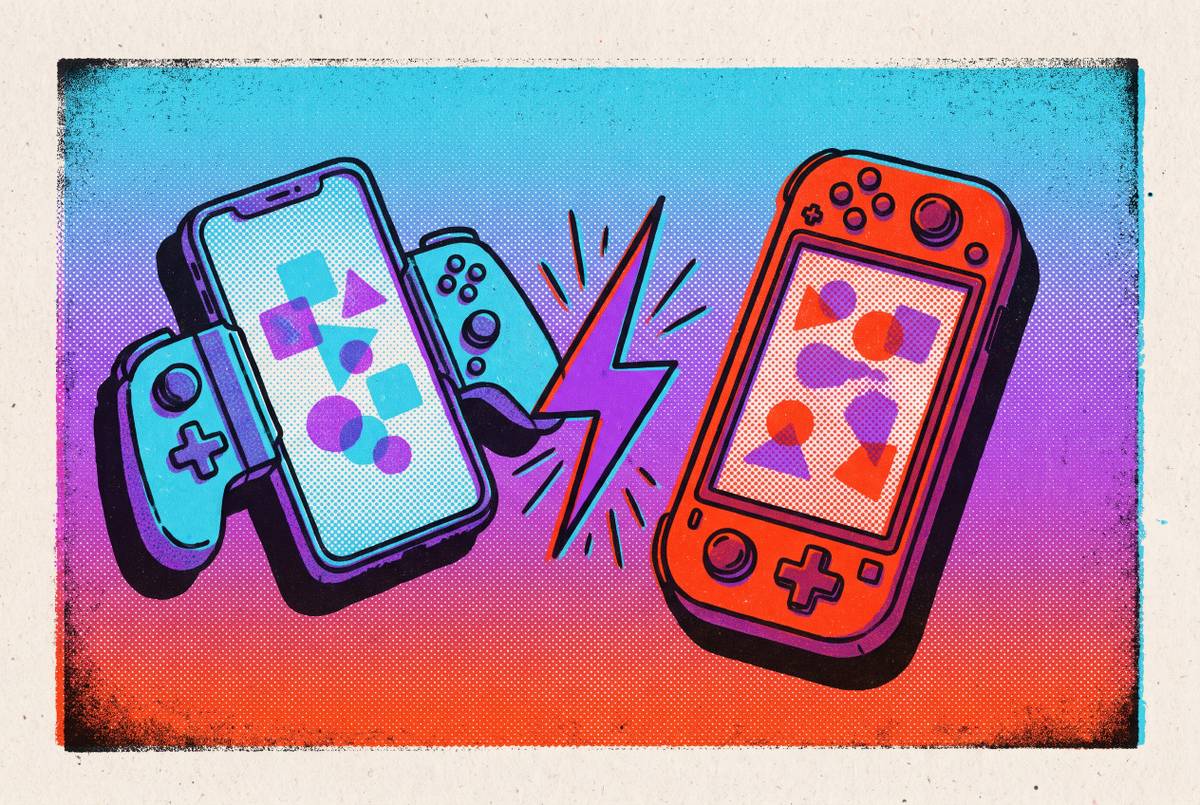
That changes the comparison with a dedicated handheld. Once physical input is available, the question shifts from whether the phone can handle those controls to how comfortable the arrangement remains. There is still a difference in the hands. No mobile controller fully reproduces the feel of a purpose-built handheld, and wrist and thumb fatigue can become apparent beyond the first half-hour. That deserves more weight in a 90-minute session than in a 30-minute window.
Wireless earbuds provide audio, a portable charger offsets the phone’s fast battery drain during gaming, and an optional cooling case can help with sustained sessions in demanding titles. These accessories also make the comparison less tidy. The phone may already be in your pocket, but the complete gaming setup is not weightless by association.
Cloud gaming and remote play as the library argument for phone gaming
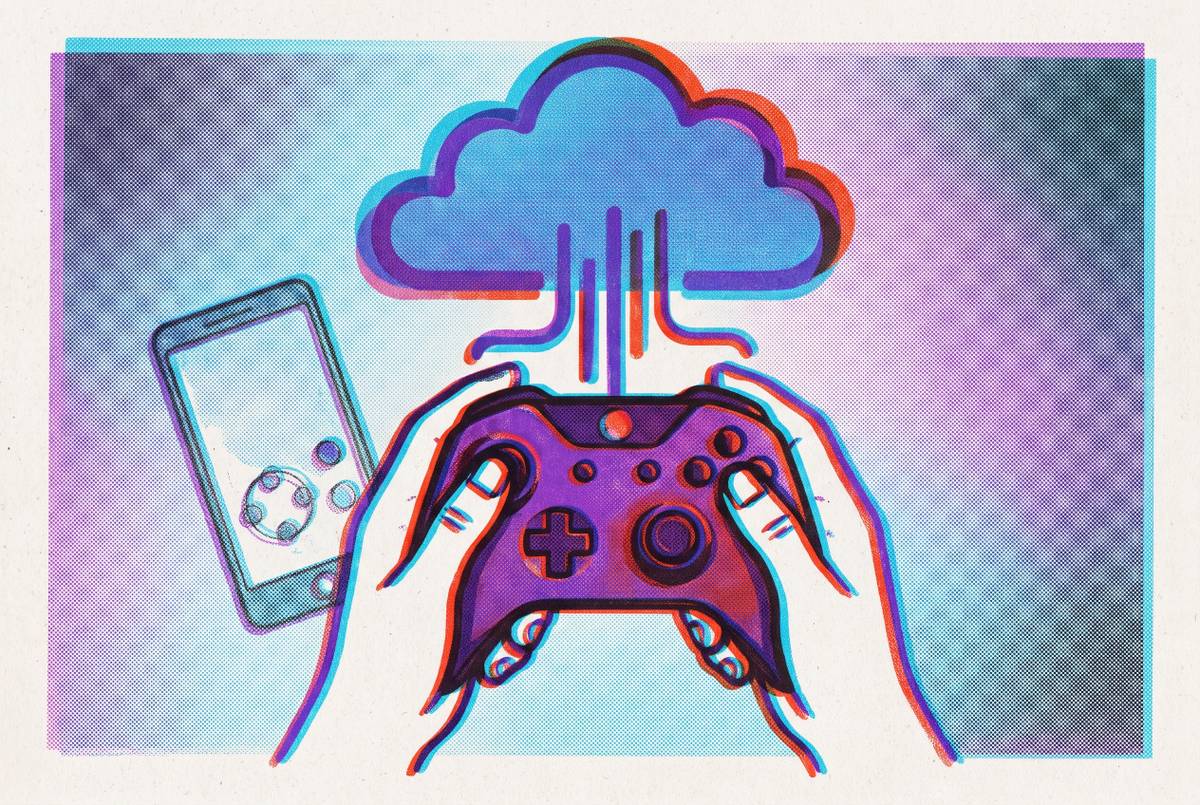
Physical controls leave a harder question about what you can play. A dedicated handheld’s deep library is a powerful advantage if the comparison includes only games installed natively on a phone. With reliable Wi-Fi or 5G, though, the phone can reach beyond those games. Cloud gaming makes the phone a way into libraries that its mobile storefront does not contain. The screen in your hands no longer defines the entire catalog.
Xbox Cloud Gaming streams console and PC Game Pass games to a phone, while GeForce NOW streams native PC games at high fidelity. The latter’s free tier offers a sensible way to test a connection before spending anything. For those who already own the hardware, PS Remote Play and Steam Link can also send PlayStation or gaming PC libraries to a phone over Wi-Fi at no extra cost. Amazon’s July 2026 move to fold Luna into Prime Video also makes cloud gaming part of a Prime subscription people already have. These ways to play give people with a connection less need for a separate portable machine.
The condition is important enough to state plainly. Cloud gaming needs strong Wi-Fi or 5G, and a network’s availability does not guarantee its suitability. Airline and hotel connections can fail the test. Reliable access at home, the office, or a hotel can make streaming practical, but planes, transit, and poorly connected areas expose the gap. Remote play does not remove that dependence on a reliable connection.
The conditions where a dedicated handheld still earns its place
Offline access is the clearest reason to keep a handheld. If the games you want depend on cloud access when played through a phone, losing connectivity removes that option. A handheld with an offline library avoids the problem. Native phone games can also work without streaming, but that does not make them substitutes for every game someone intends to play.
Grips and hardware built for long sessions make play less tiring than a phone-controller combination can. A dedicated gaming battery also leaves the phone available for calls, navigation, and communication. That separation can be essential. Fewer notifications and competing functions can make a dedicated device more immersive for players who want an extended stretch of focused play.
Library preferences can settle the decision before ergonomics enter it. Nintendo’s Mario, Zelda, and Metroid games need Nintendo hardware, and the Switch 2 is the best way to play them on the go. Its 7.9-inch display and custom Nvidia chip sit within an actively developing handheld market that also includes the Lenovo Legion Go 2 and ASUS ROG Ally X. The older Switch Lite and Switch OLED can play most Nintendo exclusives portably, though Switch 2–exclusive titles require the newer hardware. Purchased handheld libraries are also generally more stable than mobile catalogs exposed to removals when licenses lapse or platforms change.
Session length and connectivity are the two variables that determine which device wins
To apply those differences, start with two questions about the session rather than the device. How long will you actually play, and will the connection be reliable? A substantial window for controller-required games gives a dedicated handheld a clear job. A short window for mobile-native games usually does not. Uncertainty about whether any gaming will happen tilts the choice toward the phone already coming with you.
Whether there is a connection then determines which games can be played. A short connected session can suit a phone with a controller and streaming access, while a long offline session gives the handheld both a library advantage and an ergonomic one. The mixed cases need more care. A handheld may still be more comfortable for a long session with a connection, while a native phone game may be all that a short offline session needs.
If the handheld sits unused in your bag for two weeks, leave it home. The phone handles the gaming you actually do, even if the handheld fits the session you picture having. A bag is not a waiting room for good intentions. Packing the handheld for a substantial planned window is different from giving it a permanent place just in case.
What the cost difference means in practice, by player type
The financial comparison begins with what is already owned. A phone requires no new hardware purchase to start playing native games, and premium mobile titles can supply substantial play for a fraction of handheld hardware costs. Existing Netflix access and free-tier cloud gaming can reduce the initial outlay further. Subscription libraries are not free merely because they live on a phone, however. Apple Arcade and Google Play Pass belong on the ongoing-cost side of the comparison, while a physical controller is a one-time purchase.
A dedicated handheld starts with a larger commitment. The Switch 2 requires a substantial hardware investment, PC handhelds cost more, and accessories and games add to the total. For a casual player who plays in short bursts most days, that expense may not buy additional playing time. The phone already fits the available windows. Extra hardware in that situation can add cost and weight without changing the activity it was bought to support.
A dedicated player faces a different calculation. Regular 90-minute sessions on planes, a need for an offline library, or a preference for Nintendo exclusives gives the purchase a recurring purpose. The phone stays in the pocket for short chances to play, while the handheld comes out for planned long sessions and stays out of the daily bag the rest of the time.
Making the call: a plain decision process for readers at the crossover point
Before the next purchase, ask three questions about needs that a phone setup may not meet. First, do you often play for long stretches somewhere without reliable Wi-Fi or 5G? If so, an offline handheld library and sustained comfort earn their place. If not, that particular reason to buy disappears.
Second, do you need games unavailable through mobile or cloud access? Nintendo exclusives and access to Steam’s full anti-cheat-enabled catalog can make library compatibility decisive. The handheld must fit the library you want. A Nintendo device handles the Nintendo games, while the PC games you need help decide which PC handheld to buy. If your intended games are already reachable through native mobile play, cloud services, or remote play, library access is no longer a reason by itself to purchase separate hardware.
Third, does gaming use up phone battery you need for calls, navigation, and communication? If it does, especially during long sessions, a handheld’s separate battery provides a concrete benefit. If the answer to all three questions is no, a quality controller for the phone is the better investment than a new handheld. A yes to one or more supports buying the handheld that meets that need, while keeping the phone setup available for shorter sessions.